
Chai Meaning: Why Jewish Gifts Come in $18s
Chai (חי) means life in Hebrew and equals 18 in gematria, which is why gift-givers use multiples of 18. The meaning, the math, and the full ladder.
Chai converter
Type any amount, get the chai multiples around it
Ask any Jewish grandparent why the check is for $180 instead of a round $200, and you will get the same one-word answer: chai. It is the single most common piece of math behind Jewish gift-giving, and the reasoning is simpler than it looks once someone explains it.
What does chai mean?
Chai (חי) is the Hebrew word for life, pronounced with a soft “kh” sound, like the “ch” in the composer Bach’s name. It is one of the most recognized words in Jewish culture, showing up on jewelry, in toasts, and in the specific dollar amounts people give as gifts.
How does chai equal 18? (Hebrew gematria explained)
Gematria is the traditional practice of assigning a numeric value to each Hebrew letter and finding meaning in words that share the same total. Chai is spelled with two letters: chet (ח), which equals 8, and yud (י), which equals 10. Add them together and you get 18. Because gematria treats numerically equal words as connected in meaning, 18 became strongly associated with “life” itself, and by extension with wishing someone a long and good one.
Why do Jewish gifts come in multiples of 18?
Giving money in a multiple of 18 is a way of attaching a blessing for long life to the gift itself, on top of whatever the cash is meant to cover. It is a beloved custom, not a requirement of Jewish law, so nobody is doing anything wrong by giving a round $50 or $100 instead. Still, the custom is widespread enough in the US that $18, $36, $54, and $180 show up constantly at bar and bat mitzvahs, weddings, and tzedakah (charity) donations, where a gift “in multiples of chai” is treated as a small, understood gesture of goodwill.
Is giving in multiples of 18 a religious requirement?
No. It is minhag (מנהג, “custom”), not halacha (Jewish law), which means it carries real cultural weight without being obligatory. Nobody checks, and a rabbi will not weigh in on whether your check was $100 or $108. The custom persists because it is a small, low-effort way to add meaning to a gift that is otherwise just a number, and because it gives guests an easy default instead of guessing at a round figure. Chai’s popularity also comes from where it sits: 18 is large enough to feel intentional but small enough to multiply cleanly into gift-sized amounts, from $18 up to $1,800 and beyond.
Does the amount have to be an exact multiple of 18?
Not strictly. Plenty of guests give a plain $50 or $100 with no thought to gematria at all, and that is completely acceptable. Where the custom actually shows up is at the planning stage: someone deciding between $100 and $108 will often pick $108 specifically because it is a multiple of chai, and a guest who wants to signal extra warmth will round up to the next multiple of 18 rather than down. Treat it as a tiebreaker, not a rule you can get wrong.
The chai ladder: named multiples from $18 to $1,800
Only the first two or three steps have common nicknames; beyond that, people usually just say the multiple or state the dollar figure directly.
| Multiple | Amount | Name |
|---|---|---|
| 1x | $18 | Chai |
| 2x | $36 | Double chai |
| 3x | $54 | Triple chai |
| 5x | $90 | Five times chai |
| 10x | $180 | Ten times chai |
| 20x | $360 | Twenty times chai |
| 30x | $540 | Thirty times chai |
| 50x | $900 | Fifty times chai |
| 100x | $1,800 | Chai me’ah (a hundred times chai) |
For the full breakdown of who typically gives at each level, the bat mitzvah gift amount and bar mitzvah gift amount guides map these numbers to specific relationships and family sizes.
Chai beyond money: jewelry and l’chaim toasts
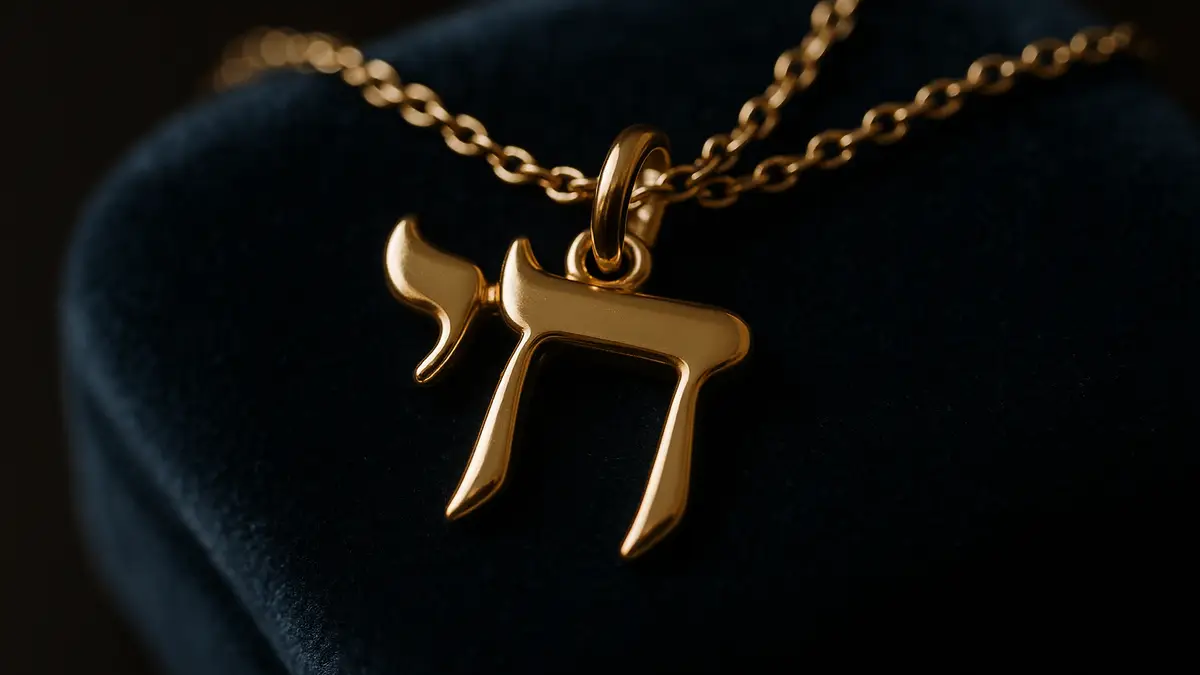
The chai symbol, the two Hebrew letters chet and yud stylized as a single pendant, is one of the most common pieces of Jewish jewelry, worn as a simple statement of Jewish identity rather than tied to any specific dollar figure. The word also appears in l’chaim (לחיים), literally “to life,” the toast raised at weddings, bar and bat mitzvahs, and other happy occasions. Both the pendant and the toast trace back to the same root idea: life is the thing worth celebrating and blessing, and 18 is the number that carries that wish in numerical form.
Chai as a gift itself, not just a gift amount
A chai pendant, ring, or charm makes the symbolism visible instead of hidden inside a dollar figure, which is why it shows up so often on bat mitzvah and bar mitzvah gift lists alongside the Star of David and the hamsa. It works at almost any budget: a simple sterling silver pendant starts around $18 to $30, while gold or diamond-accent versions run well past $100. Giving a chai necklace alongside a check in a multiple of 18 is a common combination for close family, since it repeats the same blessing in two forms, one you wear and one you spend.
Putting chai to work on your next gift
Once you know the number, applying it is easy: round your planned gift up or down to the nearest multiple of 18, or use the ladder above to pick a step that fits the relationship. For actual dollar guidance by relationship and family size, see the bat mitzvah or bar mitzvah amount guides, browse gift ideas if cash is not the plan, or run your numbers through the gift calculator for one specific figure.
Frequently asked questions
Quick answers to what guests ask us most
Why do Jews give money in multiples of 18?
Because chai (חי), the Hebrew word for life, has a gematria value of 18. Giving money in multiples of 18 is meant as a symbolic wish for a long life, a custom rather than a legal requirement, and it is most common at bar and bat mitzvahs, weddings, and charitable giving.
What is gematria?
Gematria is the traditional Jewish practice of assigning a numeric value to each Hebrew letter and finding significance in words or phrases that share the same total. Chai's value of 18 is the most widely known example in everyday use.
Is $18 the only chai amount, or are there others?
Any multiple of 18 counts: $36 is double chai, $54 is triple chai, and larger gifts like $180 or $1,800 follow the same logic. See the full ladder in this guide or the gift ideas list for non-cash options.
What does l'chaim mean?
L'chaim (לחיים) means "to life" and is the traditional toast said at Jewish celebrations, sharing the same root word as chai. It is a toast, not a dollar amount, though both point to the same value placed on life.