
Jewish Holidays: The Full Year, With Dates
Jewish holidays for 2026 and 2027: a full-year table with Hebrew dates, Gregorian dates, what each one celebrates, and whether it involves gifts or work restrictions.
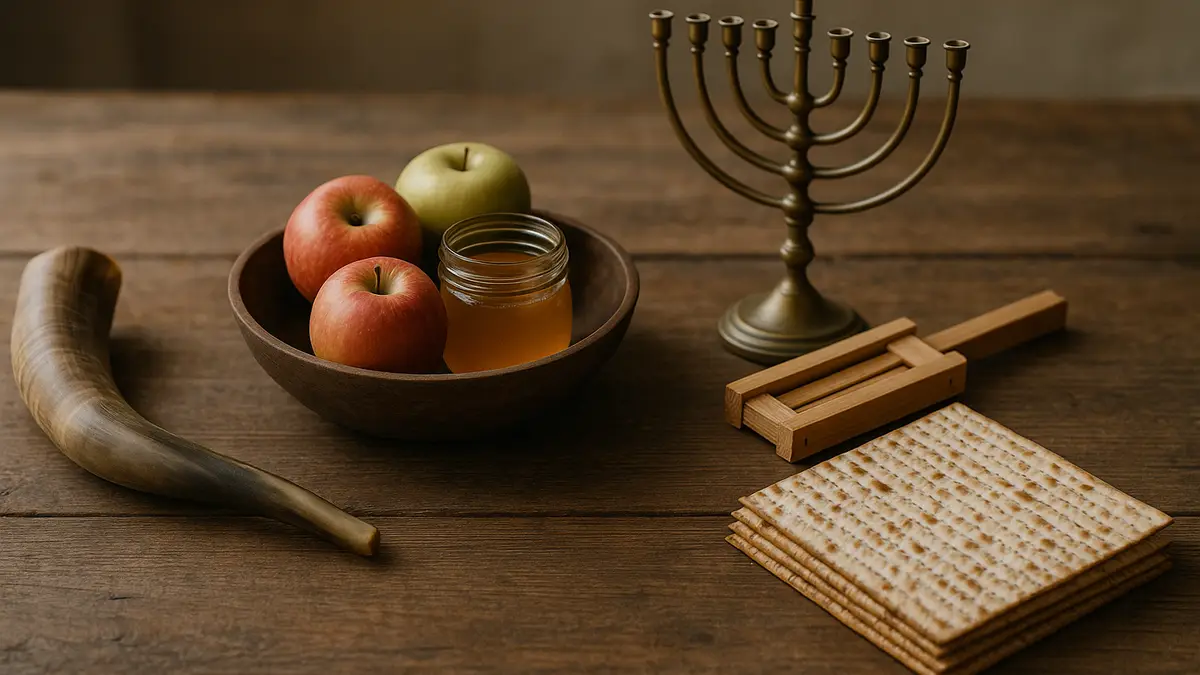
If you’ve ever wondered why Hanukkah is “early” one year and “late” the next, or why Passover doesn’t sit on a fixed spot on your calendar app the way Christmas does, this page answers it. Here’s the full Jewish year, with real dates for 2026 and 2027, plus what each holiday actually is.
Why do Jewish holiday dates move every year?
The Hebrew calendar is lunisolar: each month follows the moon, running 29 or 30 days, which makes a standard 12-month Hebrew year about 11 days shorter than the 365-day solar year. Left alone, that drift would slowly push Passover, a holiday tied to the spring barley harvest, into winter or summer over a few decades. To prevent that, an extra leap month (Adar I) is inserted seven times every 19 years, which is why some years get a sudden month-long jump forward on the Gregorian calendar. Hebrew year 5787 (starting fall 2026) is one of those leap years, which is exactly why Purim and Passover land in 2027 instead of early 2026.
How are Jewish holidays organized?
Three tiers, roughly:
- High Holidays (Yamim Noraim, “Days of Awe”): Rosh Hashanah and Yom Kippur, the ten days of reflection and repentance that anchor the religious year.
- Pilgrimage festivals (Shalosh Regalim): Passover, Shavuot, and Sukkot, historically the three occasions when ancient Israelites traveled to the Temple in Jerusalem.
- Minor and rabbinic holidays: Hanukkah, Purim, Tu BiShvat, and fast days like Tisha B’Av, none of which carry the biblical work-restriction status of the holidays above.
The full year: Jewish holidays 2026-2027
| Holiday | Hebrew date | Begins (sunset) | Work restricted? | Gift-giving? |
|---|---|---|---|---|
| Rosh Hashanah | Tishrei 1-2 | Sep 11, 2026 | Yes | Minor (cards, honey) |
| Yom Kippur | Tishrei 10 | Sep 20, 2026 | Yes, strictest | No |
| Sukkot | Tishrei 15-21 | Sep 25, 2026 | First 2 days yes | No (host gifts common) |
| Shemini Atzeret / Simchat Torah | Tishrei 22-23 | Oct 2, 2026 | Yes | No |
| Hanukkah | Kislev 25 (8 days) | Dec 4, 2026 | No | Yes, major |
| Purim | Adar 14 | Mar 22, 2027 | No | Yes, mishloach manot |
| Passover | Nisan 15-22 | Apr 21, 2027 | First/last 2 days yes | No (host gifts common) |
| Shavuot | Sivan 6 | Jun 10, 2027 | Yes | No |
A few minor holidays round out the year without fixed, headline-worthy dates here: Tu BiShvat (the “new year for trees”) falls in January, and Tisha B’Av, a summer fast day commemorating the destruction of the ancient Temple, falls in late July or August. Neither restricts work, and neither involves gifts.
What’s the difference between the High Holidays and the pilgrimage festivals?
The High Holidays are about individual reflection: Rosh Hashanah opens the new year with the sound of the shofar, and Yom Kippur closes the ten-day period with a full fast and atonement. The pilgrimage festivals are older and more historically rooted in agricultural cycles and communal gathering: Passover marks the exodus from Egypt in spring, Shavuot marks the giving of the Torah at Sinai seven weeks later, and Sukkot marks the fall harvest with a week spent, at least symbolically, in a temporary outdoor hut. Both categories carry work restrictions on their main days; the minor holidays generally don’t.
Which holidays actually involve giving gifts?
Two, clearly: Hanukkah and Purim. Hanukkah has become the American gift-giving holiday within Jewish life, eight nights, often with a small gift each night, covered in full in our Hanukkah gifts guide. Purim’s gift custom is older and more specific: mishloach manot, food-gift baskets exchanged between friends and neighbors, which our Purim guide covers in detail. Every other holiday on this list is either gift-free by tradition or, at most, comes with a small hostess gift if you’re a guest at someone’s holiday meal, honey at Rosh Hashanah or wine at a Passover seder, rather than a wrapped present.
Bar and bat mitzvah timing around the calendar
Because Shabbat services happen every week regardless of the holiday calendar, most bar and bat mitzvah ceremonies aren’t scheduled around these dates at all, families simply pick an available Saturday. The exceptions are the holidays themselves and the intermediate days of Sukkot and Passover, when many synagogues don’t hold life cycle celebrations, and the period between mid-July and early August on the Jewish calendar (the Three Weeks, leading up to Tisha B’Av), when some more traditional communities avoid scheduling celebrations at all. If you’re planning one, our bat mitzvah planning guide covers date selection alongside everything else on the checklist.
Do Israel and the diaspora ever celebrate on different days?
Occasionally, yes. Israel and Reform congregations everywhere observe one day for holidays that Orthodox and Conservative diaspora communities extend to two, Passover and Sukkot being the clearest examples, a leftover safeguard from when confirming a new month’s start took time to travel outside Israel. Rosh Hashanah is the one exception celebrated for two days even within Israel, since it falls right at the start of a new month when timing verification was historically hardest.
How does this calendar affect gift timing?
If you’re regularly buying gifts for a Jewish friend, family member, or coworker, this calendar is worth bookmarking for reasons beyond curiosity: Hanukkah shopping needs to start earlier some years than others given the date swings shown above, and Rosh Hashanah and Passover both call for a small hostess gift if you’re invited to a holiday meal, worth planning a few days ahead rather than grabbing something on the way out the door.
Go deeper on any single holiday
Each holiday above has its own full guide on this site: start with Rosh Hashanah if the new year is coming up, or jump to Hanukkah and Passover, the two most widely celebrated holidays among American Jewish families, for the full story, traditions, and what to bring if you’re invited to someone’s table.
Frequently asked questions
Quick answers to what guests ask us most
Why do Jewish holidays fall on different dates every year?
The Hebrew calendar is lunisolar: months follow the moon (29 or 30 days each), which makes a 12-month year about 11 days shorter than the solar year. A leap month is added seven times every 19 years to keep holidays anchored to their correct season, which is why Gregorian dates drift and occasionally jump forward by a full month.
Which Jewish holidays are the biggest?
Rosh Hashanah and Yom Kippur (the High Holidays) carry the most religious weight; Passover, Shavuot, and Sukkot are the three pilgrimage festivals with deep historical roots. Hanukkah is comparatively minor religiously but has become the most visible holiday in American culture.
Do Jewish holidays start in the morning or the evening?
In the evening. Every Jewish day, and every Jewish holiday, begins at sunset the night before, following the biblical framing 'there was evening, and there was morning.' That's why every date on this page is listed as 'begins at sunset.'
Which Jewish holidays involve gift-giving?
Hanukkah is the big one, small nightly gifts over eight nights, plus gelt (chocolate or real coins). Purim also involves gift-giving, but of a different kind: mishloach manot, food gift baskets exchanged between friends. Most other holidays don't carry a gift tradition at all.