
What Is Hanukkah? The Story, Dates, and Traditions
What is Hanukkah? The eight-night Jewish festival of lights, starting December 4, 2026: the Maccabee story, menorah rules, latkes, dreidels, and gift customs.
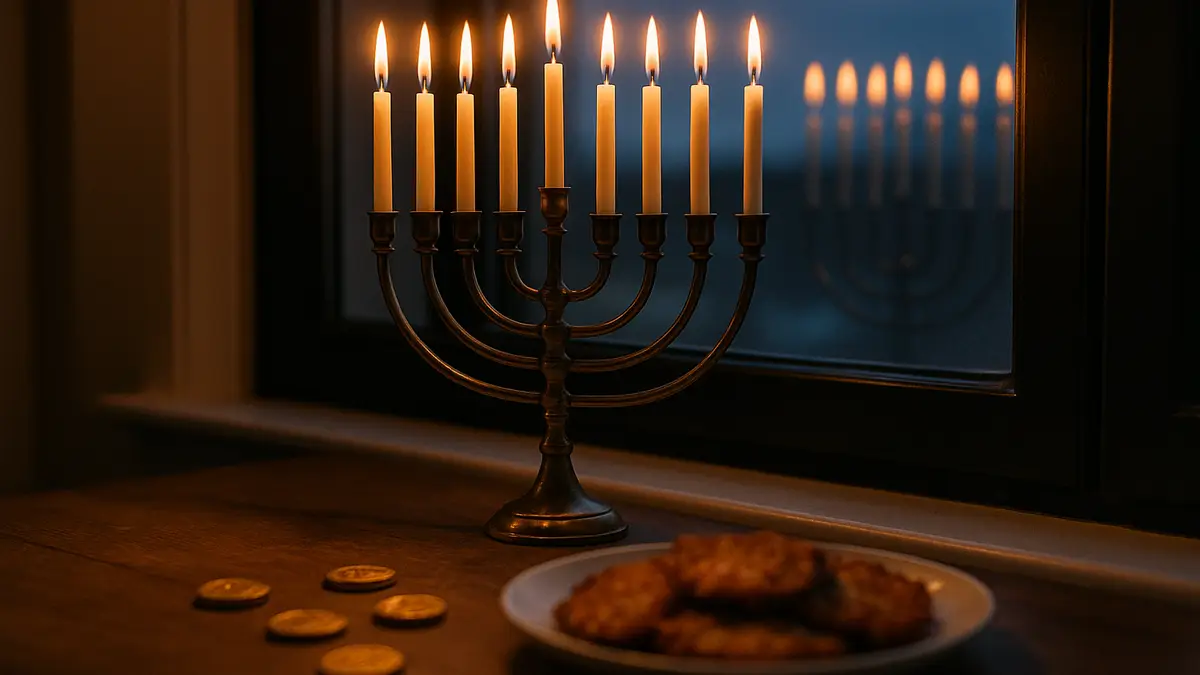
Hanukkah gets more American cultural airtime than its religious ranking actually justifies, and that’s fine, it’s a genuinely good holiday. Here’s the real story behind the candles, what the objects on your friend’s counter are actually called, and where the gift tradition came from.
What is Hanukkah, exactly?
Hanukkah is an eight-night Jewish holiday commemorating the rededication of the Second Temple in Jerusalem after a Jewish revolt, led by the Maccabees, retook it from Greek-Syrian control in the 2nd century BCE. It begins on the 25th of Kislev on the Hebrew calendar, which lands at sunset on December 4, 2026, and runs eight nights through the night of December 11, ending the following day, December 12.
What’s the actual story behind Hanukkah?
Around 165 BCE, the Seleucid (Greek-Syrian) empire controlled Judea and had outlawed Jewish religious practice, defiling the Temple in the process. A small band of Jewish fighters called the Maccabees, led by Judah Maccabee, launched a revolt and improbably retook Jerusalem, then set about rededicating the Temple (“Hanukkah” means “dedication”). The famous oil story comes from later rabbinic tradition: when it came time to relight the Temple’s menorah, the Maccabees found only enough consecrated oil to burn for one day, but it lasted eight, which is why the holiday runs eight nights and centers on light.
What is the difference between a menorah and a hanukkiah?
A menorah is technically any branched candelabrum, including the seven-branched one described in the Torah that stood in the ancient Temple. A hanukkiah is the specific nine-branched version used at Hanukkah: eight branches, one for each night, plus a ninth, usually raised or set apart, called the shamash (“helper”), which is used to light all the others. Everyday conversation uses “menorah” loosely for both, but if you want the precise word for the Hanukkah object, it’s hanukkiah.
How do you light a hanukkiah?
Candles are placed right to left, adding one new candle each night starting from the right side, but they’re lit left to right, so the newest candle is always lit first. The shamash candle lights all the others and then sits in its own raised spot, distinct from the eight it just lit.
| Night | Candles placed (right to left) | Candles lit (left to right) |
|---|---|---|
| 1 | 1 candle | Newest (leftmost of that night) first |
| 4 | 4 candles | Night’s newest candle lit first, then rest |
| 8 | 8 candles | Newest candle first, working right |
The shamash never counts toward the nightly total, and by the eighth night, a full hanukkiah has nine flames burning at once, eight candles plus the shamash, which is what makes the last night’s window display so noticeably brighter than the first.
What food is traditional at Hanukkah?
Fried food, specifically, because oil is the whole point of the holiday. Latkes (crispy fried potato pancakes, usually served with applesauce or sour cream) are the classic Ashkenazi dish; sufganiyot (jelly-filled fried doughnuts) are the equally classic Israeli one. Both exist for the same reason: eight days of oil deserves eight days of frying.
What is the dreidel game, and what do the letters mean?
A dreidel is a four-sided spinning top, each side marked with a Hebrew letter: Nun, Gimel, Hei, and Shin. Together they stand for “Nes Gadol Haya Sham,” Hebrew for “a great miracle happened there,” referencing the oil. In Israel, dreidels swap the Shin for a Peh, changing the phrase to “happened here,” since the miracle happened locally rather than “there.” As a game, each letter also tells a player what to do with a pot of gelt or tokens: Nun means take nothing, Gimel means take everything, Hei means take half, and Shin (or Peh) means add one to the pot.
Is Hanukkah “Jewish Christmas”?
No, and it’s worth saying plainly because the comparison is common and inaccurate. Hanukkah commemorates a military and religious rededication story, not a birth, and religiously it ranks well below Rosh Hashanah, Yom Kippur, and Passover. Its prominence in American culture comes largely from its calendar proximity to Christmas and the natural pull toward giving Jewish kids their own December celebration, not from its standing within Judaism itself. Comparing the two flattens a holiday with its own distinct story into a stand-in for someone else’s, worth avoiding even with good intentions.
Where did the gift-giving tradition come from?
Gelt, small gifts of money given to children (and originally to teachers, as a token of thanks), is the older custom by a wide margin, documented in Jewish communities for centuries before modern gift-giving became standard. The custom of wrapped presents each night is a newer, largely American development, generally traced to the 20th century, that grew alongside Hanukkah’s rising visibility next to Christmas. Foil-wrapped chocolate coins, also called gelt, are the modern edible version, cheap, ubiquitous, and mostly used as dreidel-game currency today. If you’re shopping for someone this year, our Hanukkah gifts guide lays out a full eight-night gift structure, and judaica gifts covers hanukkiahs and other ritual pieces worth giving as the big-night present.
Does Hanukkah move around the calendar much?
Yes, the same lunisolar drift that shifts every Jewish holiday applies here too, so Hanukkah can land anywhere from late November to late December depending on the year, occasionally overlapping with Thanksgiving and, in leap years, sometimes pushing later into December than people expect. Our Jewish holidays hub covers why that drift happens and lays out the dates for the rest of the year around it, useful context if you’re trying to plan shopping or travel around it in advance.
Before you light the first candle
Hanukkah 2026 runs sunset December 4 through the night of December 11, ending December 12. If you’re new to the holiday or shopping for a Jewish friend for the first time, start with the gift guide linked above, and if a chai-multiple cash gift makes more sense for your relationship, our chai meaning guide explains the $18 convention that carries over from bar and bat mitzvah gifting.
Frequently asked questions
Quick answers to what guests ask us most
Is Hanukkah a major Jewish holiday?
Religiously, no, it ranks well below Rosh Hashanah, Yom Kippur, and Passover in traditional importance, and it doesn't restrict work. It became prominent in American Jewish life largely because of its calendar proximity to Christmas, not because of its religious weight.
What is the difference between a menorah and a hanukkiah?
A menorah is any multi-branched candelabrum, including the seven-branched one from the ancient Temple; a hanukkiah is specifically the nine-branched version used for Hanukkah, eight branches for each night plus one raised branch (the shamash) used to light the others. Most people say 'menorah' for both, but 'hanukkiah' is the precise term.
What do the letters on a dreidel mean?
Nun, Gimel, Hei, and Shin stand for 'Nes Gadol Haya Sham,' Hebrew for 'a great miracle happened there.' Dreidels sold in Israel swap the Shin for a Peh, changing the phrase to 'happened here.'
How much money do you give for Hanukkah gelt?
Chocolate gelt, foil-wrapped coins, is the traditional game piece and costs almost nothing. Real cash gelt varies widely by family, often a few dollars per night for younger kids. See our Hanukkah gifts guide for a full night-by-night gift structure.