
Judaica Gifts: A Buying Guide for Every Occasion
Judaica gifts by occasion: kiddush cups, candlesticks, mezuzahs, and menorahs, with price bands and what actually gets used versus what collects dust.
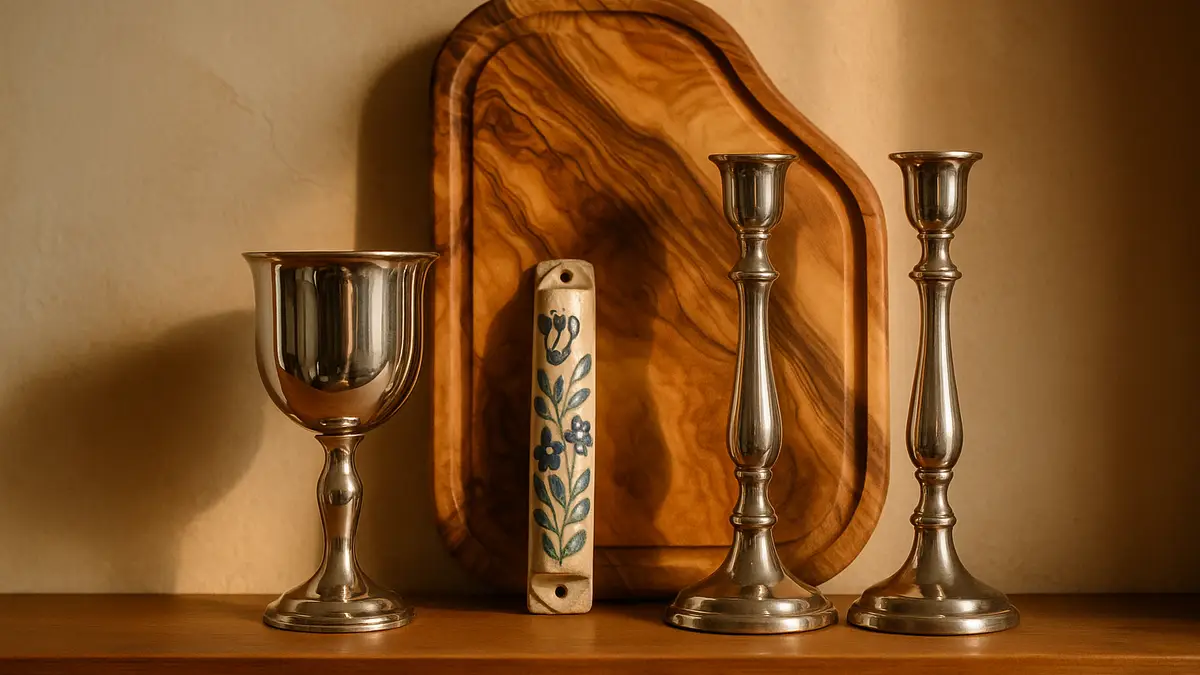
Judaica, Jewish ceremonial and decorative objects, solves a gift problem most people don’t realize they have: money and jewelry cover a lot of occasions, but a home needs candlesticks, a new marriage needs a kiddush cup, and Hanukkah needs a menorah every single year. Here’s what to buy, by occasion, and where the quality actually matters.
Judaica by occasion
| Occasion | Best Judaica gift | Typical price |
|---|---|---|
| B’nai mitzvah | Kiddush cup, tallit, or Hebrew name art | $40-$200 |
| Housewarming (chanukat habayit) | Mezuzah with a kosher scroll | $30-$150 |
| Wedding | A pair of kiddush cups, Shabbat candlesticks | $60-$250 |
| Hanukkah | Menorah (chanukiah), dreidels, a nice candle set | $30-$150 |
Kiddush cups
A kiddush cup is the cup used for kiddush, the blessing recited over wine or grape juice to sanctify Shabbat and Jewish holidays. Basic pewter or glass cups start around $20-$40; a nicely made sterling silver cup, the kind that becomes a family heirloom, runs $80-$300. A pair (for a wedding, so each partner has one) is a classic, low-risk gift that gets used almost every week.
Shabbat candlesticks
Candlesticks hold the two candles lit to welcome Shabbat each Friday evening, traditionally a role taken on by the woman of the household, though practice varies and many families share the ritual across genders. Simple brass or glass pairs start at $30-$50; hand-crafted silver or artist pieces run $150-$400. Because they’re used weekly, candlesticks rank among the most-used Judaica gifts a home can receive.
Mezuzahs: why the scroll matters more than the case
A mezuzah is a case affixed to a doorframe containing a klaf, a small parchment scroll handwritten by a certified scribe (sofer) with specific verses from the Torah, including the Shema. The case itself, wood, metal, ceramic, glass, ranges from $15 to $500 and is purely decorative. The scroll is what makes the mezuzah kosher and meaningful, and it’s easy to buy a beautiful case with no scroll at all, or a printed one that doesn’t meet the traditional standard. When gifting a mezuzah, confirm the scroll is included and kosher, or say clearly in the card that the case comes empty so the recipient can source a proper scroll themselves.
Challah boards and covers
A challah board is a serving board (often paired with a cloth cover) used for the braided bread eaten at Shabbat and holiday meals. Simple wood boards start around $30; engraved or hand-painted pieces run $60-$120. This is a low-pressure, purely functional gift with almost no way to get it wrong.
Tallit and kippah as gifts
A tallit is a fringed prayer shawl worn during morning services, traditionally by men in Orthodox and many Conservative communities, and increasingly by people of all genders in Reform and egalitarian Conservative congregations, practice varies by family and denomination. A kippah (also called a yarmulke) is the head covering worn during prayer and, in observant households, throughout the day. Both make thoughtful b’nai mitzvah gifts, since the honoree may wear a new tallit for the first time at the ceremony itself, but check with the family first. Parents or grandparents often give the tallit, and a duplicate is a genuinely awkward outcome. A nice tallit runs $60-$250; a set of kippot (plural of kippah) for a family or guest table runs $20-$60.
How to judge quality before you buy
A few material terms separate a piece that lasts decades from one that looks tired within a year. “Sterling silver” (stamped 925) is solid silver alloy that tarnishes but polishes back; “silver-plated” is a thin silver layer over base metal that eventually wears through. Hand-blown glass shows small natural variations and costs more than machine-pressed glass, which is perfectly fine for everyday use but won’t read as heirloom-grade. For ceramics, hand-painted pieces cost more than printed designs and hold their color better over time. None of these cheaper options are bad gifts, they’re simply a different tier, so match the material to how close you are to the recipient and how long you want the piece to last.
Tzedakah boxes
A tzedakah box, sometimes called a pushke, is a small container for collecting coins for tzedakah, a word rooted in “righteousness” and commonly translated as charity. Simple tin or ceramic boxes run $18-$40; artist-made or sterling silver versions run $80-$200. It’s a gift with a built-in lesson, especially nice for a younger recipient, since using it becomes a small weekly habit rather than a one-time display piece.
Menorahs
A Hanukkah menorah, properly called a chanukiah, has nine branches: eight for the nights of Hanukkah plus one raised branch for the shamash, the helper candle used to light the others. This differs from the seven-branched menorah associated with the ancient Temple, a common mix-up worth avoiding. Basic metal chanukiahs start at $25-$40; artist-made or family-heirloom-quality pieces run $80-$300. Since most families already own one, a menorah works best as a wedding gift for a couple starting their own household, or as a genuine upgrade for someone whose menorah has seen better days. Our Hanukkah gift guide and Hanukkah overview cover the rest of the holiday’s gift-giving customs.
What’s meaningful versus what collects dust
The pattern holds across every category above: pieces used on a schedule, weekly candlesticks, a kiddush cup at every Shabbat dinner, a menorah every winter, get used and appreciated for decades. Purely decorative Judaica, a wall plaque, a figurine, a piece with no functional role, tends to sit in a closet unless the recipient specifically collects that kind of item. When in doubt, pick the object that has a job to do.
Before you wrap it
Judaica works at nearly any budget, but if you’d rather give cash and let the recipient choose their own piece, the gift amount guide has the numbers by relationship. And if you’re a guest outside the Jewish community wondering whether any of this is your place to give, our guide for non-Jewish guests says plainly: yes, and here’s how to pick well.
Frequently asked questions
Quick answers to what guests ask us most
What is Judaica, exactly?
Judaica is the term for Jewish ceremonial and decorative objects: kiddush cups, candlesticks, mezuzahs, and menorahs among them, used in religious practice or everyday Jewish home life. Most pieces are functional, not purely decorative.
Is a mezuzah a good gift?
Yes, especially for a housewarming (chanukat habayit, literally dedication of the house). Buy a case that includes a kosher parchment scroll, or confirm one is included, since a beautiful case with no scroll or a non-kosher one is a common and disappointing gap.
What's an appropriate price range for a Judaica gift?
Modest but well-made pieces, a nice kiddush cup or a pair of candlesticks, run $30-$150. Museum-quality or sterling silver pieces run $200 and up. Match it to your relationship with the recipient using our gift amount guide as a rough calibration.
Is Judaica an appropriate gift for a non-Jewish guest to give?
Yes, thoughtfully chosen Judaica is welcomed from any guest. Pick something functional, a challah board or a kiddush cup, rather than anything with specific religious text you're unfamiliar with. Our guide for non-Jewish guests has more reassurance.