
What Is Rosh Hashanah? The Jewish New Year Explained
What is Rosh Hashanah? The Jewish new year, its shofar, apples and honey, and greetings, plus 2026 dates. Begins at sunset on September 11, 2026.
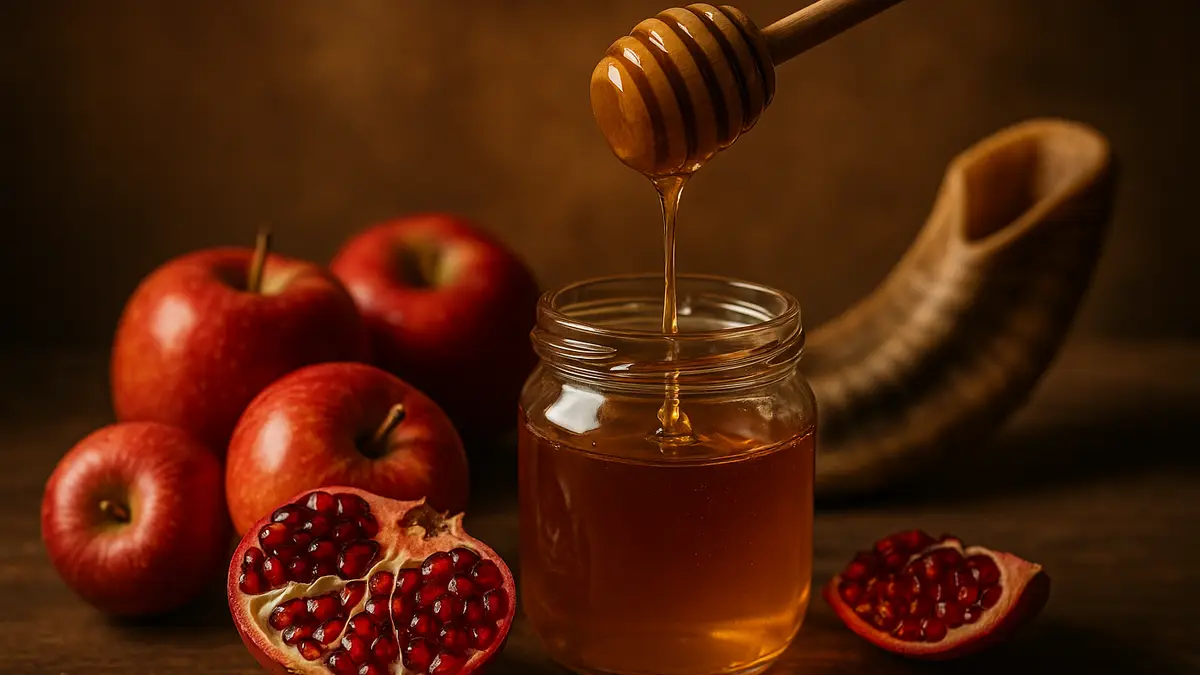
Rosh Hashanah doesn’t come with fireworks or a countdown, but it’s the Jewish new year in every sense that matters: a fresh calendar page, a night of symbolic food, and the start of the year’s most reflective ten days. Here’s what actually happens.
What is Rosh Hashanah, exactly?
Rosh Hashanah, literally “head of the year,” is the Jewish new year, a two-day holiday falling on the first and second days of the Hebrew month of Tishrei. In 2026 it begins at sunset on September 11 and runs through nightfall on September 13. Unlike the secular New Year, it’s a solemn, reflective holiday as much as a celebratory one, framed around self-examination rather than a party.
Why is the shofar blown on Rosh Hashanah?
The shofar is a ram’s horn, blown in a specific pattern of blasts during the Rosh Hashanah morning service, and it’s the holiday’s most distinctive sound. Its blast is traditionally understood as a wake-up call, a summons to reflection and repentance rather than a musical flourish, and hearing it is considered a core part of properly observing the day.
Why apples and honey?
Dipping apple slices in honey and eating them is the best-known Rosh Hashanah custom, a simple, hopeful symbol: a wish for a sweet new year ahead. Round challah, braided into a circle rather than the usual oblong loaf, carries similar symbolism, representing the cycle of a full year and the wish for continuity. Neither food carries a legal or ritual requirement, they’re symbolic gestures, not commandments, which is part of why they’ve traveled so easily into casual, secular-adjacent Rosh Hashanah gatherings.
What is tashlich?
Tashlich (“casting off”) is a custom, usually performed on the afternoon of Rosh Hashanah, of walking to a body of flowing water, a river, lake, or ocean, and symbolically casting away the past year’s mistakes, traditionally by tossing breadcrumbs into the water while reciting specific verses. It turns an abstract idea, letting go of the previous year, into a physical, often communal act, and in many communities it’s become a genuinely popular family outing.
How do you greet someone on Rosh Hashanah?
| Greeting | Meaning |
|---|---|
| Shana tova | A good year (the simplest, most common option) |
| Shana tova u’metuka | A good and sweet year |
| L’shana tova tikatevu | May you be inscribed for a good year (more traditional, references the Rosh Hashanah image of names being written in a book) |
| Happy New Year | A perfectly fine, informal fallback in English |
Any of these work in a text, card, or in-person greeting; “shana tova” alone covers nearly every situation.
What are the Days of Awe?
The Days of Awe (Yamim Noraim) are the ten days that run from Rosh Hashanah through Yom Kippur, considered the most spiritually significant stretch of the Jewish year. Tradition frames Rosh Hashanah as when a person’s fate for the coming year is written, and Yom Kippur, ten days later, as when it’s sealed, with the days between reserved for reflection, repentance, and repairing relationships. Many people use this window to reach out to friends or family they’ve drifted from, a practical, relationship-repairing habit that sits alongside the more formal synagogue observance. Our Yom Kippur guide covers what happens at the close of that arc, including the fast and its rules.
Is Rosh Hashanah a “work day” holiday like Shabbat?
Yes, both days carry the same work restrictions as Shabbat under traditional Jewish law, no driving, no using electronics, no regular work activity, and many synagogues hold their highest-attendance services of the entire year on Rosh Hashanah, sometimes requiring tickets for non-members. It isn’t a US federal holiday, so observant employees typically take personal or religious leave to attend services. For background on how these restrictions work generally, see our what is Shabbat guide, which explains the same underlying framework.
Does Rosh Hashanah connect to bar and bat mitzvah season?
Not directly, since most bar and bat mitzvah ceremonies are scheduled around an ordinary Saturday rather than the holiday calendar, but families do tend to avoid booking a simcha on or right around the High Holidays themselves, given how packed synagogue calendars get in September. If you’re weighing dates for a fall ceremony, it’s worth checking the Rosh Hashanah and Yom Kippur dates first before locking in a Saturday nearby.
What’s a good gift if you’re invited to a Rosh Hashanah meal?
A jar of good honey, a bottle of kosher wine, or a fruit basket are all standard, welcome choices, since the holiday’s whole food symbolism already runs toward sweetness and abundance. A round challah board or a nice honey dish also works well as a slightly more lasting gift, our judaica gifts guide covers ritual and tableware pieces along these lines if you want something the family keeps using year after year.
What other foods show up at a Rosh Hashanah meal?
Beyond apples, honey, and round challah, many families include pomegranates, whose many seeds are read as a wish for a year full of good deeds, and dishes made with carrots, sliced into coin-like rounds as a symbol of prosperity. None of this is fixed or required, different communities and countries of origin bring their own additions, particularly Sephardic and Mizrahi families, who often hold an extended symbolic-foods ritual called simanim earlier in the meal, working through a whole list of foods chosen for wordplay and blessing rather than taste alone.
Heading into the new year
Rosh Hashanah opens a stretch of the calendar that’s busy by Jewish standards, Yom Kippur ten days later, then Sukkot right behind it. Our Jewish holidays hub lays out the full sequence with dates, so you’re not caught off guard by what’s coming next.
Frequently asked questions
Quick answers to what guests ask us most
What do you say to someone on Rosh Hashanah?
"Shana tova" (a good year) is the simplest, most common greeting and works in any setting. "Shana tova u'metuka" (a good and sweet year) is a warmer, slightly more traditional version.
Why do people eat apples and honey on Rosh Hashanah?
Apples dipped in honey are a symbolic wish for a sweet new year, one of several foods eaten for their symbolism at the Rosh Hashanah table. It's a hopeful gesture rather than a rule, and it's the single most recognizable Rosh Hashanah custom in American Jewish life.
What is tashlich?
A Rosh Hashanah custom, typically done in the afternoon, of walking to a body of flowing water and symbolically casting away the past year's mistakes, often by tossing breadcrumbs into the water while reciting specific verses. It's a physical, communal ritual built around the idea of starting fresh.
Is Rosh Hashanah a work holiday, like a day off?
Religiously, yes, work is restricted on both days the same way it is on Shabbat, though it isn't a US federal holiday, so most people take personal or religious leave from their jobs to observe it. Many synagogues hold their most crowded services of the year on Rosh Hashanah.