
What Is Passover? Pesach Explained, With 2027 Dates
What is Passover? The Exodus story, the seder plate explained item by item, chametz and matzah rules, and what to bring if you're a guest. Begins April 21, 2027.
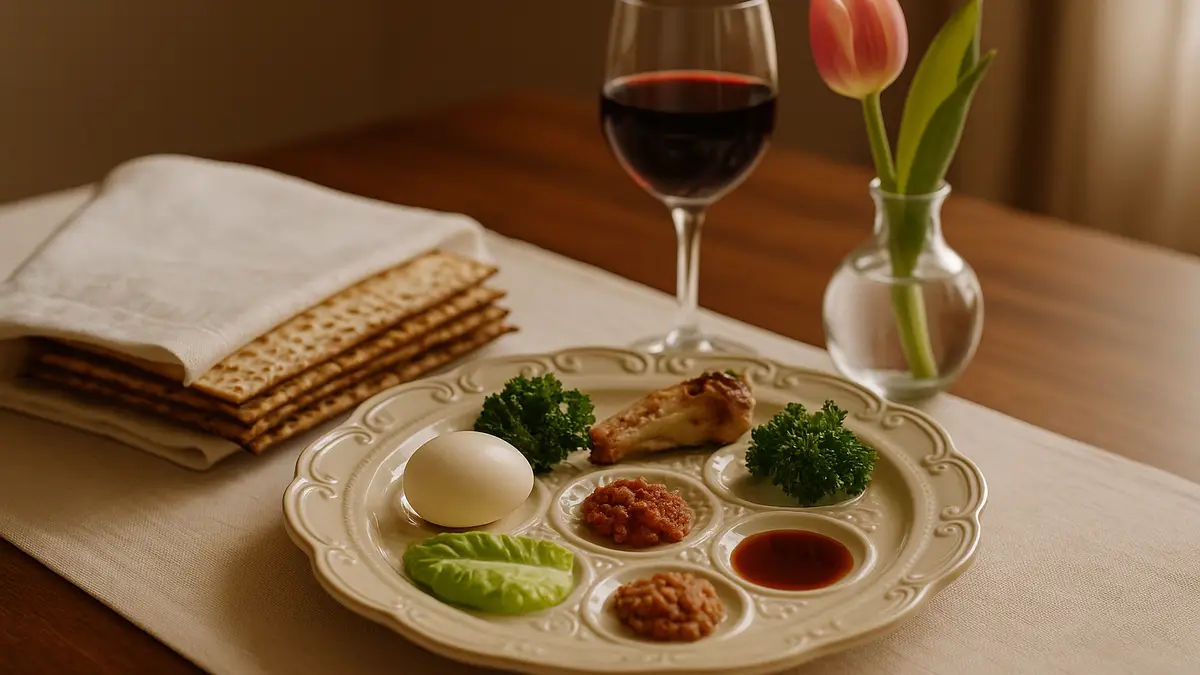
If you’ve been invited to your first Passover seder, the amount of ritual packed into one dinner can be a lot to take in: a plate of symbolic foods, a script everyone reads from, and a kid hunting for hidden matzah halfway through. Here’s the whole thing explained, plus what to bring.
What is Passover, in one sentence?
Passover, or Pesach in Hebrew, is an eight-day holiday (seven in Israel and in Reform practice) commemorating the biblical story of the Israelites’ escape from slavery in Egypt, observed with a ritual meal called the seder on the first night (or first two nights, in traditional diaspora practice) and restrictions on eating leavened grain products for the full holiday.
What is the Exodus story, briefly?
According to the Torah’s book of Exodus, the Israelites were enslaved in Egypt for generations until Moses, commanded by God, confronted Pharaoh and demanded their freedom. Pharaoh refused repeatedly, and Egypt was struck by ten plagues, the last of which, the death of the firstborn, “passed over” Israelite homes marked with lamb’s blood on the doorpost, which is where the holiday gets its name.
Pharaoh finally relented and the Israelites fled in such haste that their bread dough had no time to rise, leaving them with only flat, unleavened bread, matzah, to eat. That single detail became the holiday’s core symbol: for eight days, Jewish households eat matzah instead of bread and avoid leavened grain products entirely.
What happens at a Passover seder?
The seder (literally “order”) is a structured ritual meal that walks through the Exodus story using a text called the haggadah, combining reading, songs, symbolic foods, and four cups of wine. Traditionally, the youngest child at the table asks the Four Questions (Mah Nishtana), which all boil down to one theme: why is this night different from every other night? The answers, delivered through the rest of the haggadah, are the story itself.
What’s on the seder plate, and what does each item mean?
| Item | Hebrew name | What it symbolizes |
|---|---|---|
| Bitter herbs | Maror | The bitterness of slavery |
| Apple-nut-wine mixture | Charoset | The mortar used in forced labor |
| Green vegetable, dipped in salt water | Karpas | Spring, and the tears of slavery |
| Roasted shank bone | Zeroa | The Paschal lamb sacrifice |
| Roasted egg | Beitzah | The festival offering and the cycle of life |
| Second bitter vegetable | Chazeret | Additional bitterness, used in a matzah sandwich |
Matzah itself sits separately, usually stacked three pieces deep, with the middle piece broken in half early in the seder, half becomes the afikomen.
What is the afikomen, and why do kids hunt for it?
The afikomen is the broken half of the middle matzah, hidden by an adult (or, in some households, deliberately “stolen” by the kids) early in the seder and searched for later, with a small prize or reward for whoever finds it. It’s functional, not just cute: a seder can run two to three hours, and the hunt keeps children engaged through a meal built mostly around adult-length reading and ritual.
What is chametz, and what can’t you eat during Passover?
Chametz is any food made from wheat, barley, rye, oats, or spelt that has leavened or fermented, essentially standard bread, pasta, beer, and most baked goods. Observant households do a full pre-Passover cleaning to remove chametz from the home and switch to Passover-specific dishes and cookware, sometimes covering counters and swapping in a dedicated set of Passover-only pots and plates that stay boxed up the rest of the year. Matzah, the substitute, is unleavened flatbread baked quickly, traditionally in under 18 minutes, to prevent any rising at all. Our what is kosher guide covers the broader dietary law this all sits within.
Why is Passover eight days in some places and seven in others?
In the ancient world, the start of each Hebrew month was confirmed by witness testimony and relayed by messenger, and communities outside Israel sometimes received the news a day late, risking getting a holiday’s date wrong. An extra “insurance” day was added to festivals for diaspora communities, and Orthodox and many Conservative congregations outside Israel still observe eight days as a result. Reform congregations everywhere, and all Jews within Israel, where the calendar uncertainty never applied, keep the original seven.
What should I bring if I’m invited to a seder?
A bottle of wine or grape juice labeled “Kosher for Passover” is the safest, most appreciated gift, note that regular kosher certification isn’t automatically sufficient, since Passover has its own stricter production rules around chametz. Flowers are also a fine choice, since Passover falls in spring and isn’t a fast day. Skip anything bread-based, pasta, baked goods, beer, for the obvious reason that it’s exactly what the household just spent days removing from the house. Timing-wise, hand a host gift over when you arrive rather than mid-seder; our general gift etiquette guide covers the same instinct in more detail.
How long does a seder actually last?
Longer than most first-timers expect: a traditional seder can run two to three hours from the opening kiddush to the final songs, with the meal itself landing roughly in the middle, well after several rounds of ritual and reading. Reform and more streamlined family seders often run closer to 90 minutes. Either way, it’s not a sit-down-and-eat-immediately event, and pacing yourself, especially around that first cup of wine, is worth knowing going in.
Passover 2027 dates
Passover begins at sunset on April 21, 2027 (Nisan 15). The first two nights are when seders are traditionally held in diaspora communities; the holiday itself runs through April 29 in the diaspora (eight days) or April 28 in Israel and Reform practice (seven days).
Before the holiday season gets away from you
Passover sits inside a bigger Jewish calendar worth knowing at a glance, our Jewish holidays hub covers the full year with dates for every major observance. And if Passover is your entry point into a family’s broader Jewish life, from a bris to a bar mitzvah down the line, Jewish life cycle events maps out what typically comes next.
Frequently asked questions
Quick answers to what guests ask us most
Why is Passover seven days in Israel but eight days elsewhere?
In ancient times, the exact start of a new Hebrew month was confirmed by witnesses and messengers, and communities far from Jerusalem sometimes got the news a day late. An extra day was added outside Israel as insurance, and Orthodox and Conservative communities in the diaspora still keep it; Reform Jews everywhere, and all Jews in Israel, keep seven days.
What is chametz, and why is it avoided during Passover?
Chametz is any food made from wheat, barley, rye, oats, or spelt that has been allowed to leaven or ferment, essentially anything with regular flour and time to rise. It's avoided in memory of the Israelites leaving Egypt too quickly for their bread to rise, which is also the origin of matzah.
What is the afikomen?
A piece of matzah broken off early in the seder and hidden, then searched for by children later in the meal, often for a small reward or prize when found. It's a deliberate engagement device: the seder runs long, and the afikomen hunt keeps kids invested through it.
What's a good hostess gift for a Passover seder?
A bottle of wine or grape juice certified 'Kosher for Passover' (regular kosher certification isn't automatically enough) or a bouquet of flowers both work well, since Passover falls in spring. Skip anything bread-based or containing regular flour, for obvious reasons; see gift etiquette for general timing guidance that applies here too.