
Bat Mitzvah Speech: Structure, Examples, and Length Rules
How to write a bat mitzvah speech: parent speech structure with a full example, dvar Torah basics, grandparent toast tips, candle-lighting lines, and common mistakes.
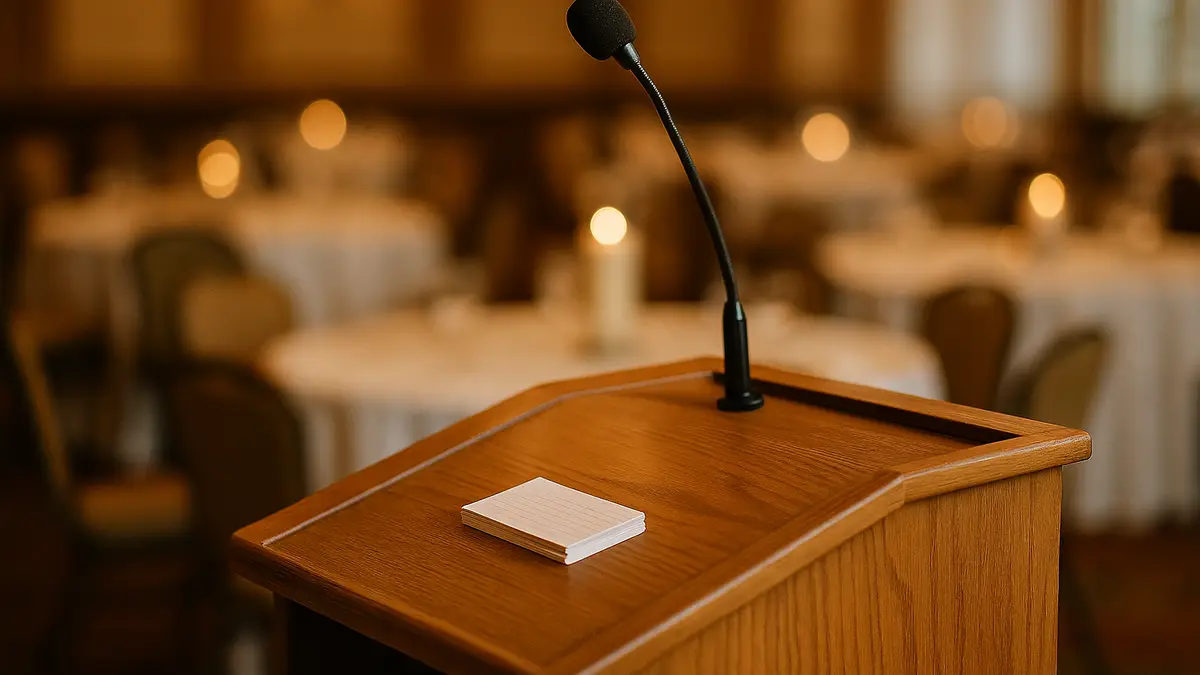
Every bat mitzvah has a moment where the room goes quiet and someone stands up to speak, usually a parent, sometimes the bat mitzvah herself, occasionally a grandparent. Here’s how to structure each of those speeches so they land the way you want them to.
The parent speech: a three-part structure
The strongest parent speeches follow a simple shape: a story, the values it reveals, and a blessing.
- The story. Open with one specific, small moment, not a life summary. A memory from when she was little, something recent that made you proud, a habit that captures who she is.
- The values. Connect that story to a trait or value you want to name publicly: her stubbornness that became determination, her curiosity, her kindness to a particular friend or sibling. This is the emotional core of the speech.
- The blessing. Close with a direct address to her, a wish or blessing for who she’s becoming. This is the part people remember and the part that’s hardest to fake if you write it last instead of first.
A full example, at length
Here’s a complete parent speech at roughly the right length, adjust the specifics to your own daughter:
“When Maya was six, she refused to leave a broken swing at the park until she’d figured out how to fix it herself. Two hours, a skinned knee, and one very patient stranger with a wrench later, she did. That’s still exactly who she is: she doesn’t walk away from something just because it’s hard, and she doesn’t let anyone else finish it for her.
That stubbornness, and we’ve called it that plenty of times over the years, has turned into something we’re genuinely in awe of. It’s shown up in how she studied for this day, in how she stands up for her friends, in the questions she asks that make the adults in the room stop and actually think. She has never once done the easy version of anything, and honestly, we’ve stopped trying to talk her into the easy version.
Somewhere in the last year, the girl who wouldn’t leave that swing became someone who reads Hebrew we can barely follow and explains her Torah portion better than either of us could. That’s not something you can shortcut. It took months of practice most people never saw.
Maya, today you became a bat mitzvah, which means the tradition now considers you responsible for the choices you make. We’ve watched you practice for that responsibility your whole life without knowing that’s what you were doing. Our blessing for you is simple: keep asking the hard questions, keep fixing the broken things instead of walking past them, and know that whatever you build next, we’re behind you. We love you, and we are so proud to be your parents.”
That runs about 270 words spoken aloud, close to the ceiling for a parent speech. Notice the structure holds even with the specific story swapped out: one memory, the value it reveals, a direct blessing at the end.
The bat mitzvah’s own dvar Torah
A dvar Torah, literally “a word of Torah,” is a short talk connecting the week’s Torah portion to a broader idea, and it’s traditionally the bat mitzvah’s own contribution to the service, distinct from her parents’ speech about her. A workable structure: summarize the Torah portion in two or three sentences, pull out one theme or moment from it, then connect that theme to something happening in her own life or in the world right now. A dvar Torah runs longer than a parent speech, typically 3 to 5 minutes, since it’s doing more work: explaining the text, then applying it. Tutors, rabbis, or cantors usually help draft this alongside the girl over the months of preparation, it’s rarely something she’s handed cold.
The grandparent toast
Grandparent toasts usually happen at the evening party rather than the synagogue service, and they run shorter and looser than the parent speech, often just a minute. A workable version: one sentence on what the day means watching a grandchild reach this milestone, one specific memory, and a closing wish. Example opening line: “I’ve been to a lot of celebrations in my life, and I can tell you, this one hits different when it’s your own granddaughter up there reading Torah.”
Candle-lighting introduction lines
If the evening party includes a candle-lighting ceremony, each candle typically gets a one- or two-sentence introduction naming who’s being called up and why. Keep these short, a full paragraph per candle turns a 10-minute segment into 30. A workable formula: “The next candle is lit by [name], who [one specific reason she matters to the bat mitzvah]. [Name], please come light candle number [X].” Repeatable, warm, and it keeps the pacing tight across all 13 candles.
Length rules, by speaker
| Speaker | Target length |
|---|---|
| Parent(s) | 2 to 3 minutes, about 250 to 350 words |
| Bat mitzvah’s dvar Torah | 3 to 5 minutes |
| Grandparent toast | 1 minute |
| Candle-lighting introduction | 10 to 15 seconds each |
Seven mistakes to avoid
- Writing the blessing last instead of first, so it feels tacked on rather than the point of the speech.
- Running long because you’re reading instead of speaking; time yourself out loud, not on the page.
- Leaning entirely on inside jokes that leave half the room confused.
- Forgetting the bat mitzvah is standing right there; speak to her, not just about her.
- Skipping a personal detail and defaulting to generic praise anyone could say about any child.
- Not rehearsing the emotional parts, which is exactly where voices crack and speeches derail.
- Making the speech about the parents’ own journey rather than the daughter’s.
Before the big day
Once the speeches are drafted, two more pieces round out the guest and family side of the day: card wording, covered in bat mitzvah card messages, and gift amounts by relationship, in the bat mitzvah gift amount guide, so the envelope matches the sincerity of everything said at the podium.
Frequently asked questions
Quick answers to what guests ask us most
How long should a parent's bat mitzvah speech be?
Aim for 2 to 3 minutes, roughly 250 to 350 spoken words. Longer speeches tend to lose the room, especially at a kiddush or party where guests are standing or mid-meal; write it, then cut it by a third.
What is a dvar Torah?
A dvar Torah, literally 'a word of Torah,' is a short reflection connecting that week's Torah portion to a broader lesson, often tied to the speaker's own life. The bat mitzvah usually delivers her own dvar Torah as part of the service or at the kiddush afterward.
Who else typically speaks at a bat mitzvah?
Beyond the bat mitzvah and her parents, it's common for a rabbi to offer a short blessing, and for a grandparent to give a brief toast, usually at the evening party rather than the synagogue service. Siblings occasionally speak as well, especially at more informal celebrations.
Can the speech be funny?
Yes, and a little humor usually helps, especially in the opening story. Keep it warm rather than cutting, avoid inside jokes only three people will understand, and land on something sincere by the end regardless of how the speech opened.