
What Happens at a Bat Mitzvah: A Guest's Play-by-Play
What happens at a bat mitzvah, minute by minute: the Shabbat service timeline, the Torah service explained, candy throwing, kiddush, and the evening party.
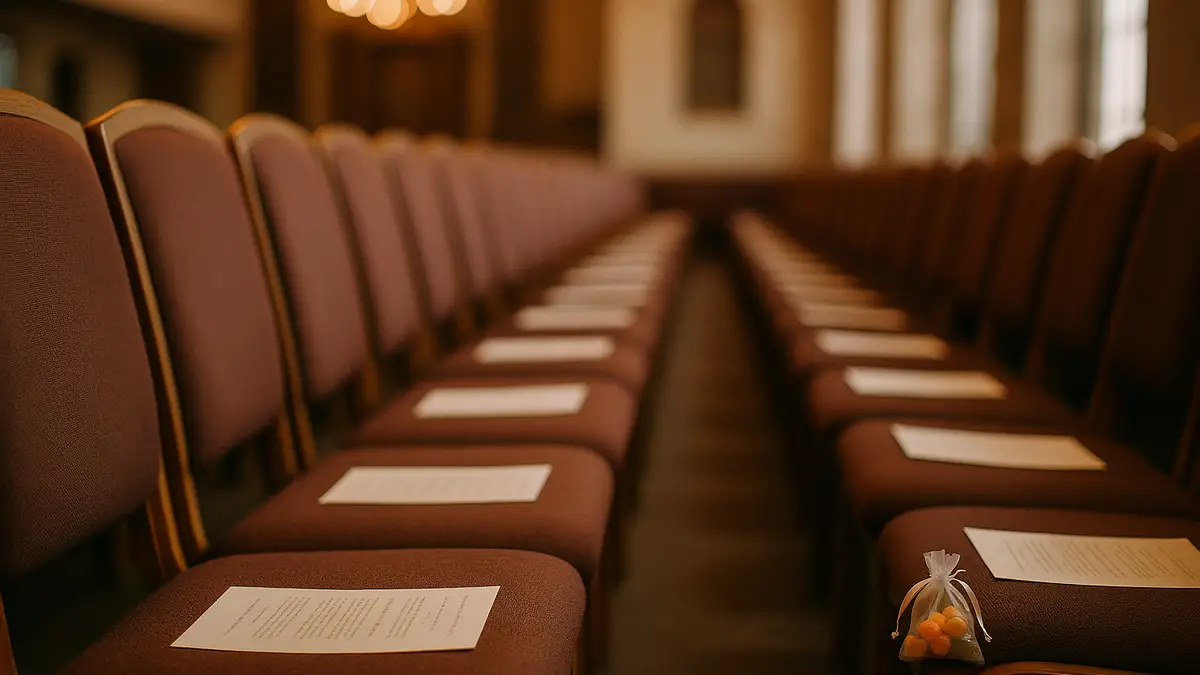
If this is your first bat mitzvah and nobody’s explained what actually happens once you’re in your seat, here’s the whole day laid out in order, from the moment the service starts to the last song at the party.
The Shabbat morning service, roughly timed
| Approximate time | What’s happening |
|---|---|
| 0:00 | Service begins with opening prayers and blessings, congregation stands and sits at several points |
| 0:30 to 1:00 | Torah service begins: the Torah scroll is removed from the ark and carried through the congregation |
| 1:00 to 1:30 | The bat mitzvah is called for her aliyah and chants her Torah portion, family members often receive aliyot around her |
| 1:30 to 1:45 | Haftarah reading, a related passage from the Prophets, often followed by candy throwing |
| 1:45 to 2:15 | Sermon or d’var Torah from the rabbi and often a short speech from the bat mitzvah and her parents |
| 2:15 to 2:30 | Closing prayers, Torah returned to the ark |
| After | Kiddush lunch in a separate room or hall |
Total time runs two to three hours depending on the movement and congregation; Orthodox and Conservative services tend to run the full traditional liturgy, while some Reform services trim or restructure parts of it, which can shorten the total.
When do guests stand, and when do they sit?
You’ll follow the congregation, standing during certain prayers (the Amidah, the Shema, and when the Torah is carried through the room) and sitting for readings and sermons. Nobody expects a first-time guest to know the cues in advance; watch the people around you and rise or sit a beat behind them, that’s completely normal and not something anyone will notice or mind. Most synagogues also print the order of service in a program, which helps you track where you are.
What is the Torah service, in plain terms?
The Torah is the scroll containing the first five books of the Hebrew Bible, and reading from it publicly on Shabbat is the religious centerpiece of the service. The scroll is removed from the ark (a cabinet at the front of the sanctuary), carried through the congregation so people can touch it with a prayer book or tallit as a sign of respect, then unrolled to the correct weekly portion on a raised table (the bimah). The bat mitzvah, called up for an aliyah, recites blessings before and after chanting a portion of that text aloud in Hebrew, using a specific melodic pattern called trope, then often continues into the haftarah, a related passage from the Prophets. What is the Torah covers the scroll and the weekly reading cycle in more depth.
The candy-throwing custom
Right after the bat mitzvah finishes her reading, don’t be startled if soft candies start flying through the air toward her. This is a genuine, widespread custom, particularly in Ashkenazi communities, symbolizing wishes for a sweet future, and children in the congregation typically scramble to collect the candy off the floor afterward. It’s a joyful, expected interruption, not a breach of decorum, and guests are welcome to join in the throwing if candy has been left at their seats.
Kiddush: the first meal of the celebration
After the service ends, most congregations move to a kiddush, a reception centered on the blessing over wine (also called kiddush) and typically including a light lunch, pastries, or a full buffet depending on the family’s plans. This is usually open to the whole congregation, not just invited guests, and it’s a good moment for informal mingling before any separate, invitation-only party later that day.
The evening party: what to expect
If the family is hosting a separate evening celebration, expect a more conventional party format: dinner, music, and dancing, often with a DJ or band and games geared toward the bat mitzvah’s friend group. A few traditions show up at most of these parties regardless of budget or venue. The hora, a circle dance where guests lift the bat mitzvah (and often her parents) on chairs, is close to universal at American bat mitzvah parties. A candle-lighting ceremony typically follows, where the bat mitzvah lights 13 candles, one at a time, each dedicated to a meaningful person in her life, with a short personal introduction for each. Many parties also include a video montage of childhood photos. None of this is religiously required, it’s American Jewish party culture that developed alongside the ceremony itself.
What guests are actually expected to do
At the service: dress modestly (see the attire guide), follow along or simply sit quietly if you’re not familiar with the prayers, and stand when the congregation does. At the kiddush: mingle, congratulate the family, eat. At the evening party: dance if you’re comfortable, participate in the hora if invited up, and enjoy dinner. Gifts are typically brought to the party rather than the service; the bat mitzvah gift amount guide breaks down how much to give by relationship, using the traditional multiples-of-18 framework.
If you’re only attending one part of the day
It’s completely normal to attend just the service, just the kiddush, or just the evening party, especially for out-of-town guests or acquaintances rather than close family. None of these choices is considered a slight; just RSVP clearly for which portions you’ll be at so the family can plan seating and catering accurately.
Frequently asked questions
Quick answers to what guests ask us most
How long does a bat mitzvah service last?
The synagogue portion typically runs two to three hours, longer in Orthodox and Conservative services that include the full weekly liturgy, shorter in some Reform services that trim or rearrange parts of the service. The evening party is a separate block of time, usually three to four hours.
What is the candy-throwing custom?
After the bat mitzvah finishes her Torah or haftarah reading, guests traditionally throw soft candy toward her from their seats, a custom symbolizing a sweet future. Children in the congregation usually scramble to collect it afterward; it's a lighthearted, expected moment, not a disruption.
Do guests have to know Hebrew to follow the service?
No. Most synagogues provide a prayer book (siddur) with English translation and page numbers announced or projected, and the family or clergy will often narrate key moments in English for guests unfamiliar with the service.
What happens at the evening party if I only attend the service?
Nothing you'll miss out on religiously, the service is the religious core of the day. The evening party, with a hora dance, candle-lighting, and dinner, is a separate social event; some guests attend only one half of the day, and that's a normal, accepted choice.