
B'nai Mitzvah Meaning: Terms, Pronunciation, and Usage
B'nai mitzvah meaning explained: the gender-inclusive plural, when to use b'not mitzvah instead, terms for nonbinary kids, and how to pronounce each one.
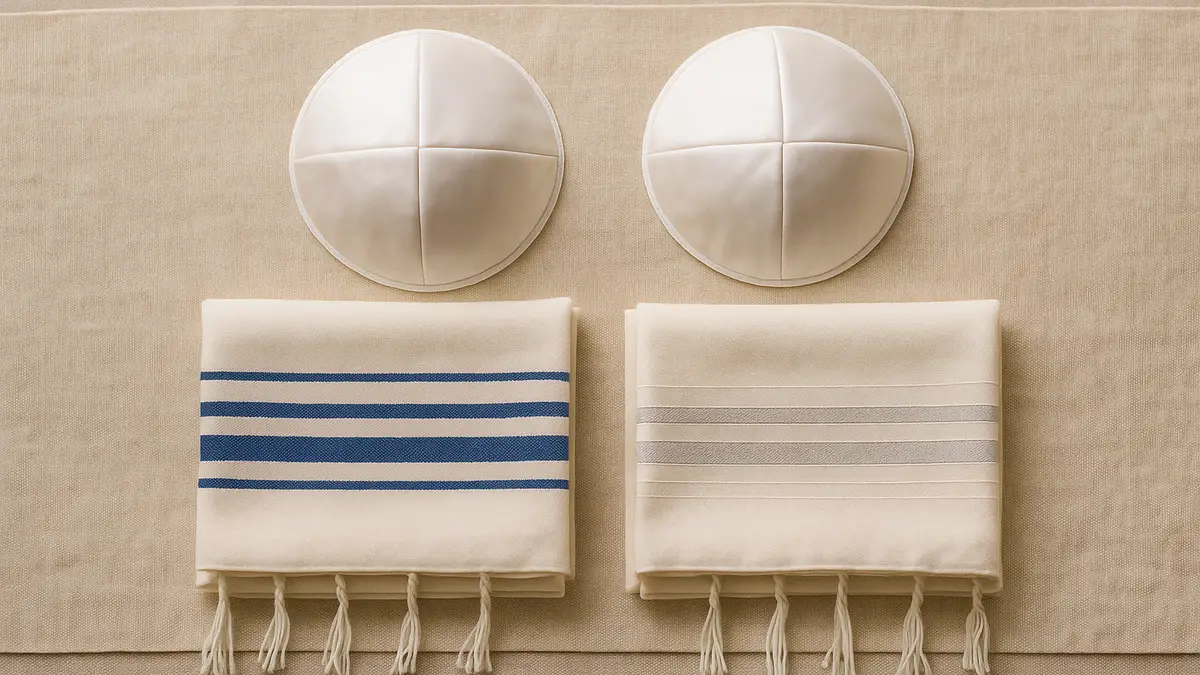
If you’ve gotten an invitation that says “b’nai mitzvah” instead of the bar or bat mitzvah you were expecting, you’re not misreading it. It’s a real, correct term, and knowing what it means (and which variant applies) makes the invitation, and the etiquette that follows, much easier to navigate.
What does b’nai mitzvah actually mean?
B’nai is the Hebrew plural of bar (son), so b’nai mitzvah literally means “sons of the commandment.” In practice, though, it’s used as a gender-inclusive collective term, “children of the commandment,” for situations involving more than one child or a mixed-gender group: siblings of different genders becoming bar and bat mitzvah together, a combined class ceremony, or simply as a neutral way to refer to the milestone in general without specifying bar or bat. If you see “b’nai mitzvah” used to describe a single child rather than a group, it’s most often being used as that general, inclusive singular reference to the milestone itself, “her b’nai mitzvah year,” rather than a literal plural.
Pronunciation guide
| Term | Pronunciation | Meaning |
|---|---|---|
| Bar mitzvah | bar mitz-vuh | Son of the commandment (one boy) |
| Bat mitzvah | baht mitz-vuh | Daughter of the commandment (one girl) |
| B’nai mitzvah | buh-NIGH mitz-vuh | Sons / children of the commandment (group or inclusive) |
| B’not mitzvah | buh-NOTE mitz-vuh | Daughters of the commandment (group, all girls) |
| Bas mitzvah | bahs mitz-vuh | Ashkenazi pronunciation of bat mitzvah |
The word “mitzvah” itself is commonly pronounced two ways in America: MITZ-vuh, the casual, Ashkenazi-influenced version, and mitz-VAH, closer to modern Hebrew. Both are widely understood and accepted; there’s no wrong choice between them in everyday conversation.
When to use b’nai mitzvah versus b’not mitzvah
The choice comes down to who’s in the group. B’not mitzvah, the specifically feminine plural, is used when every child involved is a girl, most commonly twin sisters or a small group of girls celebrating together. B’nai mitzvah covers a mixed-gender group, such as boy-girl twins, or is used as the general inclusive term when gender isn’t the point being made. Neither term is interchangeable with the singular bar mitzvah or bat mitzvah, which still apply to describe one boy or one girl individually; the plural forms are specifically for groups. Bar mitzvah vs bat mitzvah covers how the singular forms differ in age and ceremony by movement.
Terms for nonbinary and gender-expansive kids
Jewish communities, particularly Reform and Reconstructionist ones, have increasingly developed language for children who don’t identify strictly as a boy or a girl. B-mitzvah, sometimes written “b mitzvah,” has emerged in some of these communities as a singular, gender-neutral alternative to choosing between bar and bat. This practice varies significantly by congregation and movement, there’s no single standardized term across American Judaism yet, so the respectful approach is to ask the family or check the invitation for the term they’ve chosen to use, rather than assuming.
Twins and siblings: how the ceremony actually works
When twins or close-in-age siblings become bar or bat mitzvah on the same day, which is common since Hebrew birthdays can land close together, they typically share a single Shabbat service, each taking a portion of that week’s Torah and haftarah reading rather than each reading the full text independently. The invitation language usually reflects the group: “b’nai mitzvah of Jacob and Sarah” for a mixed pair, “b’not mitzvah of Emma and Ava” for twin girls, or sometimes just “the b’nai mitzvah of the [family name] twins” as a catch-all. The planning timeline runs similarly to a single ceremony, just with two children’s tutoring schedules to coordinate instead of one; how to plan a bat mitzvah covers that timeline and applies equally to joint ceremonies.
“B’nai mitzvah” as a program name, not a shared event
One more common usage worth knowing: many synagogues call their entire preparation track the “b’nai mitzvah program” or “b’nai mitzvah class,” referring to the whole cohort of kids in a given religious school year who are each working toward their own individual ceremony. If you hear a family mention their daughter’s “b’nai mitzvah class,” they don’t mean she’s sharing her ceremony with a group, she’s referring to the year-long cohort of students studying together with a tutor or cantor before each child has a separate bar or bat mitzvah on their own date. It’s a genuinely common source of confusion for guests who assume the term always means a joint ceremony; most of the time it doesn’t.
Does the term change the gift or etiquette?
Not really. Whether the invitation reads bar mitzvah, bat mitzvah, b’nai mitzvah, or b’not mitzvah, the underlying etiquette, dress code, service structure, gift-giving custom, stays the same. For a joint sibling or twin ceremony, most guests give one gift per child rather than splitting a single gift between them, since each child is individually reaching the milestone even though they’re celebrating together. The bat mitzvah gift amount guide and bar mitzvah gift amount guide both use the same chai-based framework, multiples of 18, regardless of which term is on the invitation.
Getting the wording right
If you’re the one writing the invitation, wedding-style etiquette advice doesn’t quite apply here, Jewish naming conventions are specific enough that it’s worth double-checking with a rabbi or an experienced planner before finalizing which term describes your particular group. If you’re the guest, you don’t need to get the terminology perfect in conversation; understanding it is enough to know what kind of event you’re walking into and how many children are being celebrated that day.
Frequently asked questions
Quick answers to what guests ask us most
What does b'nai mitzvah literally mean?
B'nai is the Hebrew plural of bar, so b'nai mitzvah literally translates as 'sons of the commandment,' though it's used in practice as a gender-inclusive collective term meaning 'children of the commandment' for mixed or group ceremonies.
When do you use b'not mitzvah instead of b'nai mitzvah?
Use b'not mitzvah when the group being described is entirely girls, for example twin sisters becoming bat mitzvah on the same day. B'nai mitzvah is used for mixed-gender groups or as a general gender-inclusive term.
Is there a gender-neutral term for a nonbinary child's ceremony?
Yes, in some communities. Reform and Reconstructionist congregations have increasingly used b-mitzvah, sometimes written b mitzvah, as a singular term that doesn't assign bar or bat to a nonbinary child. Practice varies by congregation, so it's worth asking the family or the synagogue which term they use.
How do twins usually mark the milestone together?
Twins commonly hold a joint ceremony on the same Shabbat, each reading a portion of that week's Torah and haftarah. The invitation and event are typically referred to as a b'nai mitzvah (twin boy and girl), b'not mitzvah (twin girls), or simply 'a bar mitzvah and bat mitzvah' for the pair.