
What Is a Bar Mitzvah? Meaning, Age, and Traditions
A bar mitzvah is a Jewish boy's coming-of-age milestone at 13. Learn what the term means, what happens at the ceremony, and why you become one, not have one.
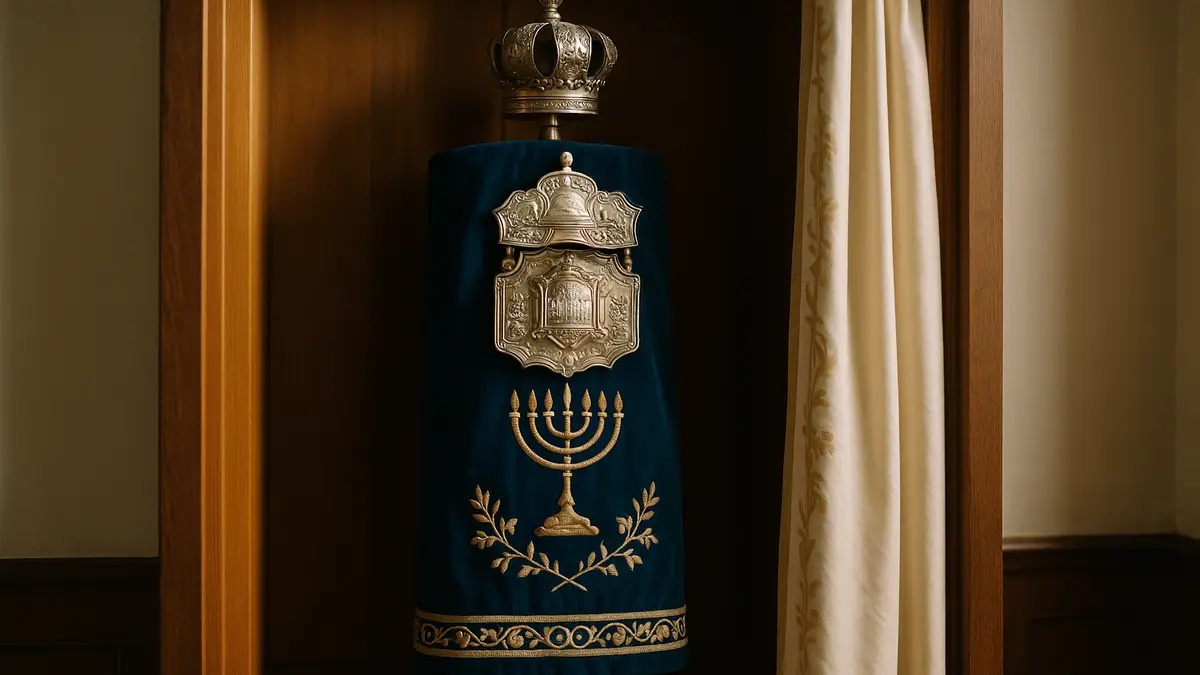
Here is the one-sentence version: a bar mitzvah is a Jewish boy’s coming-of-age milestone, reached automatically at 13, and the ceremony you’re picturing (Torah reading, party, a lot of relatives) is how families choose to mark it, not what makes it happen. The word itself, and what actually changes for the boy, is more specific than most guests realize.
What does “bar mitzvah” actually mean?
Bar mitzvah (bar, son, in Aramaic, mitzvah, commandment) means “son of the commandment.” It describes a Jewish boy’s new status once he turns 13: Jewish law now holds him personally accountable for observing the commandments (mitzvot), the way it holds an adult accountable, rather than treating him as a minor who isn’t yet obligated. The girls’ equivalent is a bat mitzvah, “daughter of the commandment,” reached at 12 or 13 depending on the movement, covered in the bat mitzvah explainer.
“You become one, you don’t have one”
This is the most common mix-up in English usage, and worth addressing directly. A boy becomes a bar mitzvah at his 13th birthday on the Hebrew calendar. He does not “have” a bar mitzvah any more than someone “has” a legal adulthood. What people usually mean by “having a bar mitzvah” is the synagogue ceremony and the party that follows it, both optional, both added on top of a status that already exists on its own. Nobody will blink if you use “having a bar mitzvah” in conversation, it’s standard usage now, but the distinction matters if you want to understand what’s actually being celebrated.
What age does it happen, and why does it not vary?
Thirteen, for every boy, in every movement.
| Movement | Bar mitzvah age | Ceremony format |
|---|---|---|
| Orthodox | 13 | Torah and haftarah reading, tefillin practice beforehand |
| Conservative | 13 | Torah and haftarah reading, full participation |
| Reform | 13 | Torah and haftarah reading, identical format to bat mitzvah |
| Reconstructionist | 13 | Torah and haftarah reading, fully egalitarian |
Unlike the bat mitzvah, where age and format both shift by movement, the bar mitzvah has been standardized at 13 for centuries, well before any of the modern movements existed. The bar mitzvah age guide covers the traditional source for that number.
Where does the tradition come from?
The bar mitzvah is much older than the bat mitzvah, which only dates to 1922 in America. The idea that 13 marks religious adulthood for boys traces back to rabbinic sources from the early centuries of the common era, and the custom of publicly marking the birthday with a Torah reading and celebration developed in medieval Europe, well established in Ashkenazi Jewish communities by the late Middle Ages. By the time the bat mitzvah was introduced as a parallel milestone for girls, the bar mitzvah had already been standard Jewish practice for hundreds of years, which is part of why its age and format never varied by movement the way the bat mitzvah’s did.
What actually changes religiously?
Three concrete things typically happen around a boy’s 13th birthday. First, he becomes obligated in the commandments as an adult, no longer exempted the way a minor is. Second, in the weeks before the ceremony he usually begins practicing with tefillin, the small leather boxes containing scriptural passages that observant Jewish adults wear on the arm and head during weekday morning prayers, a practice that starts at bar mitzvah age. Third, he becomes eligible for an aliyah, being called up to recite the blessings before and after a Torah reading, and to count toward a minyan, the quorum of ten adults needed for certain communal prayers.
What happens at the ceremony itself?
Most bar mitzvahs happen during a Shabbat morning service. The boy is called for an aliyah, then chants some or all of that week’s Torah portion and the accompanying haftarah, a related passage from the Prophets, in the original Hebrew, using a specific chant melody called trope. He has typically studied with a tutor or cantor for a year or more to prepare. Family members are often given aliyot (plural of aliyah) around his as well. Afterward comes a kiddush, a reception with wine and food, and frequently a separate, more festive evening party. What happens at a bat mitzvah walks through this same structure minute by minute; the flow is nearly identical for boys.
Guest basics: what to wear and what to bring
Synagogue attire runs modest and formal: for the service, men typically wear a suit or dress shirt and slacks, and a kippah, the head covering offered at the entrance, whether or not you’re Jewish. The what to wear guide covers dress code for every movement and applies equally to bar mitzvah services. For the gift, the standard is money given in multiples of 18, the numerical value of the Hebrew word chai, meaning life, walked through in what chai means. The bar mitzvah gift amount guide breaks the number down by how close you are to the family, from classmate to grandparent.
Before you write the check
If this is your first bar mitzvah invitation, two pages will save you the most guesswork: the attire guide for what to actually wear to the service versus the party, and the gift amount guide for a specific number instead of a vague range. Both apply the same chai-based logic that runs through every Jewish life-cycle gift in this country.
Frequently asked questions
Quick answers to what guests ask us most
Do you 'have' a bar mitzvah or 'become' one?
Strictly, a boy becomes a bar mitzvah at 13; he does not have one. In everyday American English 'having a bar mitzvah' is universally understood to mean the ceremony and party, and nobody will correct you for saying it, but the grammatically precise version describes his new status.
Is bar mitzvah age the same in every branch of Judaism?
Yes. Unlike the bat mitzvah, where Orthodox, Conservative, and Reform practice can differ, 13 is the universal bar mitzvah age across Orthodox, Conservative, Reform, and Reconstructionist Judaism. See bar mitzvah age for the reasoning behind that number.
What is the female equivalent called?
The equivalent milestone for girls is a bat mitzvah, reached at 12 or 13 depending on the movement. Bar mitzvah vs bat mitzvah lays out every difference side by side.
Does every bar mitzvah boy read from the Torah?
In Orthodox, Conservative, Reform, and Reconstructionist settings, yes, reading Torah and haftarah at a Shabbat service is the standard public marker. The amount he reads varies by congregation and by how much Hebrew he has learned; some read a single aliyah, others chant the full portion.