
What Is Sukkot? The Harvest Festival Explained
What is Sukkot? The Jewish harvest festival: sukkah rules, the lulav and etrog, and hosting customs, plus 2026 dates. Begins at sunset on September 25.
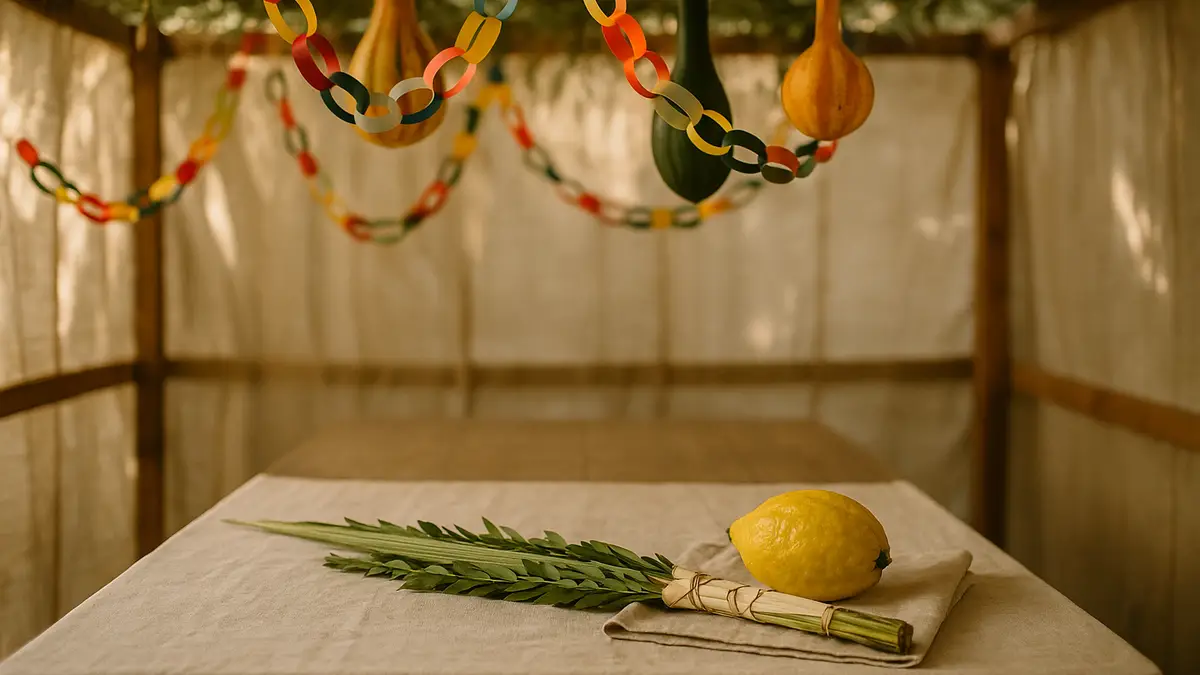
Sukkot is the Jewish holiday most likely to make a passerby stop and ask questions, mainly because it involves building a small outdoor hut in the backyard or on an apartment balcony and eating dinner in it for a week. Here’s what it’s actually about.
What is Sukkot, exactly?
Sukkot is a seven-day harvest festival, one of the three pilgrimage festivals alongside Passover and Shavuot, commemorating both the fall harvest and the temporary shelters the Israelites lived in during their 40 years wandering the desert after the Exodus. In 2026 it begins at sunset on September 25 (Tishrei 15) and runs seven days, concluding at nightfall on October 2, immediately followed by Shemini Atzeret and, in diaspora communities, Simchat Torah the day after that.
What is a sukkah, and what are the rules for building one?
A sukkah is a temporary outdoor structure, walls can be almost anything sturdy, canvas, wood panels, even a repurposed fence, but the roof (schach) has a specific rule: it must be made of plant material that grew from the ground and was cut, like bamboo poles or palm fronds, laid loosely enough that you can see the stars through it at night while still providing more shade than sun during the day. That roof rule is deliberate: the sukkah is meant to feel temporary and exposed, a physical reminder of impermanence, not a cozy, fully weatherproofed room.
Do you have to eat and sleep in the sukkah?
Eating meals in the sukkah is the central obligation for the week, and many families take every meal there when weather allows. Sleeping in it is more variable: it’s traditional and common in warmer climates, especially in Israel, but Jewish law itself permits skipping the sukkah, for meals or sleep, when weather is genuinely unpleasant, rain, extreme cold, since the point is dwelling in it comfortably, not enduring it.
What are the lulav and etrog, and what do they represent?
The “four species” are held together each day of Sukkot (except Shabbat) and waved in six directions, east, south, west, north, up, and down, during the Hallel prayers.
| Species | What it is | Traditional symbolism |
|---|---|---|
| Etrog | A fragrant citron fruit | Has both taste and fragrance |
| Lulav | Palm branch | Has taste, no fragrance |
| Hadas | Myrtle branches | Has fragrance, no taste |
| Aravah | Willow branches | Has neither taste nor fragrance |
Classic rabbinic teaching reads the four species as four types of people, some with knowledge, some with good deeds, some with both, some with neither, bound together in one bundle. The symbolism is about unity: the holiday brings every kind of person together as one community, differences included.
What is Hoshana Rabbah?
Hoshana Rabbah is the seventh and final day of Sukkot, marked by a distinctive ritual: circling the synagogue with the lulav and etrog while reciting prayers, then beating bundles of willow branches against the ground. It functions as a kind of coda to the High Holidays, a last chance for reflection before the judgment period tradition associates with Rosh Hashanah and Yom Kippur fully closes, right before the holiday turns celebratory again at Shemini Atzeret and Simchat Torah.
What is Sukkot’s connection to the harvest?
Before it took on its Exodus-shelter meaning, Sukkot was, and still is, an agricultural harvest festival, one of the reasons it’s also called Chag HaAsif, the Festival of Ingathering, marking the end of the fall harvest in the land of Israel. That dual identity, historical memory layered onto an agricultural calendar, shows up in a lot of Jewish holidays, and Sukkot wears it more visibly than most, between the actual produce used to build and decorate the sukkah and the fruit-and-vegetable symbolism that runs through the holiday.
What is the ushpizin custom?
Ushpizin (“guests” in Aramaic) is the custom of symbolically inviting a different biblical figure into the sukkah each night, traditionally seven: Abraham, Isaac, Jacob, Moses, Aaron, Joseph, and David, with many communities today also welcoming matriarchs such as Sarah, Rebecca, Rachel, and Leah. It’s less a literal belief that these figures show up and more a nightly ritual of hospitality and remembrance, reinforcing Sukkot’s broader emphasis on welcoming guests, both symbolic and real, into the sukkah.
Can you build a sukkah in a small backyard or on a balcony?
Yes, and size requirements are looser than people expect. A sukkah just needs to be large enough to hold a table and a person eating at it, which is why compact pop-up sukkah kits have become common in apartment buildings and small city yards. Some apartment complexes with Jewish residents set up a shared communal sukkah in a courtyard specifically so people without their own outdoor space can still fulfill the holiday’s central obligation.
What should I bring if I’m invited to eat in someone’s sukkah?
A bottle of wine or a beautiful piece of seasonal fruit both fit the occasion well, fruit especially, since Sukkot is a harvest festival and many families hang fruit, gourds, and produce as decoration inside the sukkah itself. Standard host-gift timing applies here the same as anywhere else: hand it over on arrival rather than mid-meal. Our gift etiquette guide covers that general rhythm in more detail, and for a lasting gift rather than a consumable one, judaica gifts covers pieces a family might display in their sukkah year after year.
Sukkot’s place in the fall holiday run
Sukkot lands just five days after Yom Kippur, close enough that many families go from the intensity of the fast straight into building and decorating a sukkah. If the sequence feels like a lot at once, that’s normal, this is the busiest stretch of the Jewish calendar. Our Jewish holidays hub maps the full run with dates, and if Shabbat customs came up while you were reading about sukkah rules, what is Shabbat explains the underlying framework those restrictions borrow from.
Frequently asked questions
Quick answers to what guests ask us most
Do you have to sleep in a sukkah?
Not strictly required everywhere, though eating meals in it is the core obligation. In Israel's climate, sleeping in the sukkah is common; in colder parts of the US in late September, many families eat there but skip sleeping outside, and Jewish law itself allows skipping the sukkah entirely in genuinely unpleasant weather.
What is the lulav and etrog used for?
They're held and waved together, in six directions, during the Hallel prayers each day of Sukkot (except Shabbat). The lulav is a bundle of palm, myrtle, and willow branches; the etrog is a fragrant citron fruit held separately in the other hand.
What is Hoshana Rabbah?
The seventh and final day of Sukkot, marked by a distinct ritual of circling the synagogue with the lulav and etrog and beating willow branches on the ground. It's considered a minor extension of the High Holidays' theme of judgment and forgiveness, closing out that arc just before Shemini Atzeret begins.
What's a good gift if I'm invited to eat in someone's sukkah?
A bottle of wine or a beautiful piece of fruit both work well, since Sukkot is a harvest festival and fruit is often part of the sukkah's decoration itself. See gift etiquette for general host-gift timing that applies just as well here.